
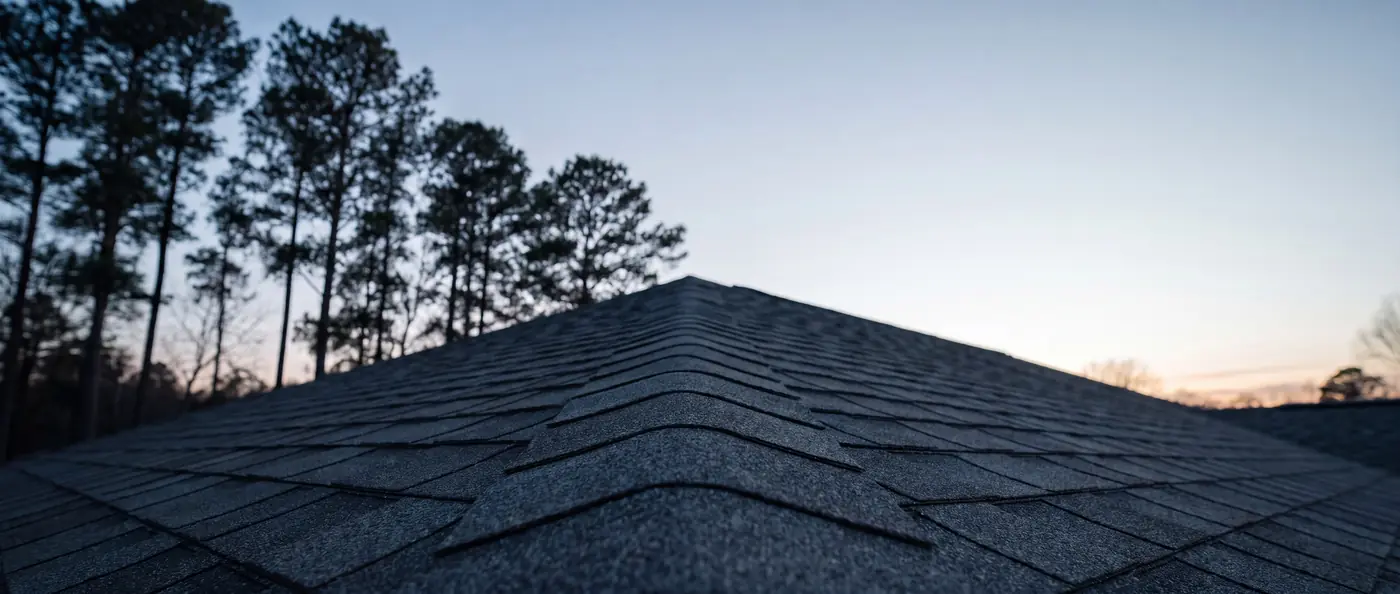
What makes a shingle architectural
Architectural shingles are also called dimensional or laminated shingles. Each one is made of two or more layers bonded together. That gives the roof a thicker, shadowed look from the street, a bit like wood shakes.
Compared with a 3-tab shingle, an architectural shingle is heavier and carries more asphalt. It also has no straight cutouts along the bottom. The edge looks uneven on purpose.
You can usually tell from the yard. If the roof looks textured, with darker shadow lines and no neat rows of slots, it's almost surely architectural. They've become the usual choice on newer homes, so you'll see them all over the newer neighborhoods around the Triad.
How they age in the Piedmont
Thicker doesn't mean immune. Our summers are hot and humid, and the sun is strong. The asphalt in every shingle slowly loses the oils that keep it flexible.
On an architectural roof, the wear tends to show up like this:
- The south and west faces fade and dry out before the rest
- Granules start collecting in gutters and on downspout splash blocks
- The color goes flat and grayish, especially on sunny slopes
- Edges stiffen and can start to lift where the seal strips weaken
These shingles look good from the street for a long time, so a lot of owners miss the early signs. By the time it's obvious, the roof may be past the best window for treatment. The heat side of it is covered in why NC summers dry out asphalt shingles.
Architectural roofs: good fit or not
Good fit when
- The layers are still bonded and lying flat
- Granules are thinning on the sunny faces, not gone
- Seal strips are mostly holding
- The deck feels solid with no soft spots
- Nothing is leaking inside the house
Not a fit when
- Layers are splitting apart or pieces are missing
- Black mat is showing through in patches
- Hail bruises cover much of the roof
- The decking is soft or sagging
- The roof is already leaking
What the treatment does for them
APEX-1132 soaks into the shingle and helps the dried asphalt flex again. On SoyLei's data sheet, treated shingles held granules 50% better than untreated ones. They also passed a bend test at 55°F that the untreated shingle failed. SoyLei says the treatment helps reactivate the asphalt in the seal strip too, which helps shingles stay stuck down and resist blowing off in high wind.
The look often changes a little. A faded architectural roof often looks darker and richer after treatment. It isn't a stain, though, and it won't match a brand-new roof exactly.
The full set of numbers is on our lab results page. To find out where your own roof stands, book a free roof assessment.
Most architectural shingles come with a manufacturer warranty. Before any treatment, check what yours says about products added to the roof. If you're not sure, call the shingle maker and ask.
Common questions
Do architectural shingles need rejuvenation?
Not right away. A newer architectural roof is usually fine on its own for years. Treatment makes the most sense once the shingles start drying out, fading and dropping granules, but before they crack, curl or leak. That middle stretch is the window to catch.
Will rejuvenation change how my architectural shingles look?
Usually a little, and in a good way. Treated shingles often look darker and richer, especially on faded slopes. It doesn't change the shape of the shingles or the shadow lines, and it isn't paint. Read will rejuvenation change my roof color for more.
Can an architectural roof be treated more than once?
Yes, as long as the shingles stay sound. Each treatment can add up to about 5 years. Treating again about every 5 years can add up to about 15 extra years in total. Before each round, we check the roof again to make sure it's still worth doing.
Does rejuvenation void an architectural shingle warranty?
We can't answer that for every brand, and we won't guess. Warranty terms vary by manufacturer. Read yours or call the shingle maker before treatment. The longer answer is in does roof rejuvenation void my shingle warranty.