Why faded shingles darken
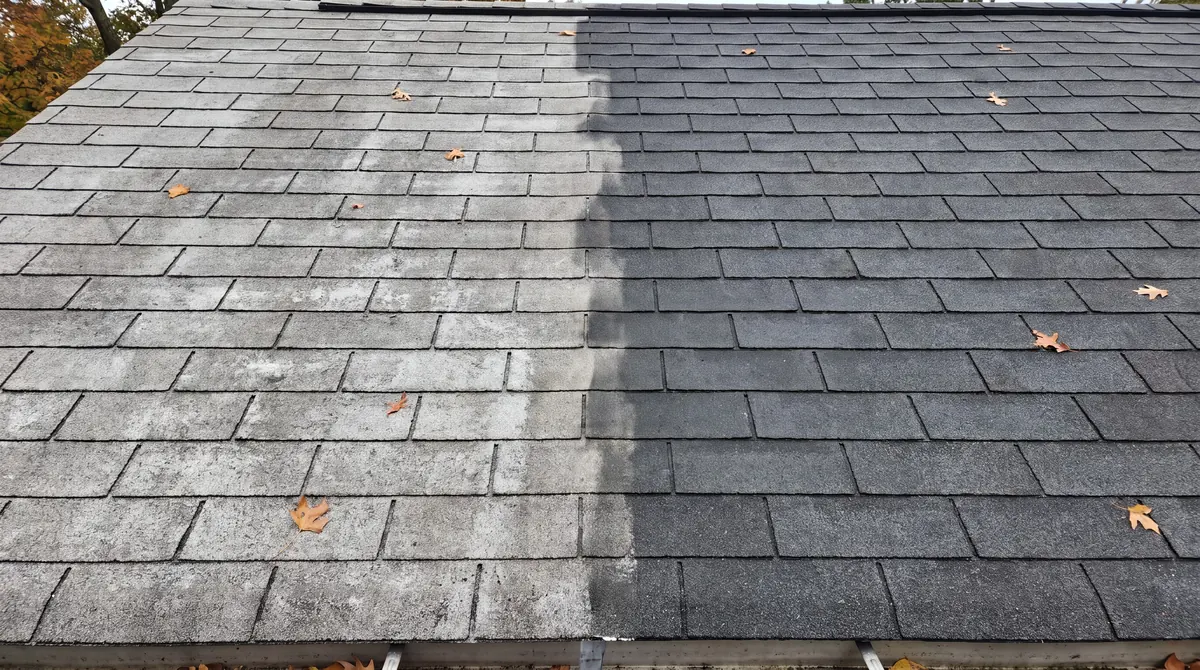
Sun and heat pull the oils out of asphalt shingles. As they dry, they look chalky and washed out. Granules shed, and the color fades most on the faces that take the hardest sun. Our page on faded, sun-bleached shingles walks through what causes it.
APEX-1132 is made to soak in and restore the asphalt. As the shingle takes it in, the surface often looks deeper in tone. The SoyLei data sheet rates its effect on sun bleaching as a long-lasting improvement. The leading competitor it was tested against showed a short-term one. The rest of the test data is on our lab results page.
What to expect, and what not to
You can expect
- A darker, richer look where shingles have faded
- The same color family your roof has now
- No white film left once it dries in
- A longer-lasting effect on sun bleaching than the competitor tested
Don't expect
- A new color or a brand-new-roof look
- Black algae streaks to go away
- Moss or lichen to disappear
- Lost granules to grow back
- Rust or sap stains to vanish
Dark streaks on shaded, north-facing roof faces are usually algae, not dirt. Rejuvenation doesn't kill algae. Read black streaks on your roof before you book anything.
More questions
Will my whole roof match after treatment?
When the whole roof is treated, every face gets the same product, so the tone stays even. Patched areas with newer shingles may still look a little different, since they never faded as much to begin with.
How long does the darker look last?
The data sheet rates the sun bleaching effect as long-lasting, and every treatment can add up to about 5 years. Color will still shift slowly as the roof keeps aging. A second treatment around year 5 can help. See how long roof rejuvenation lasts.
Can rejuvenation make an old roof look new?
No. It can take the washed-out look off faded shingles. Granules that are gone stay gone, though, and curled or cracked shingles will still show. Expect a richer roof, not a new one.