
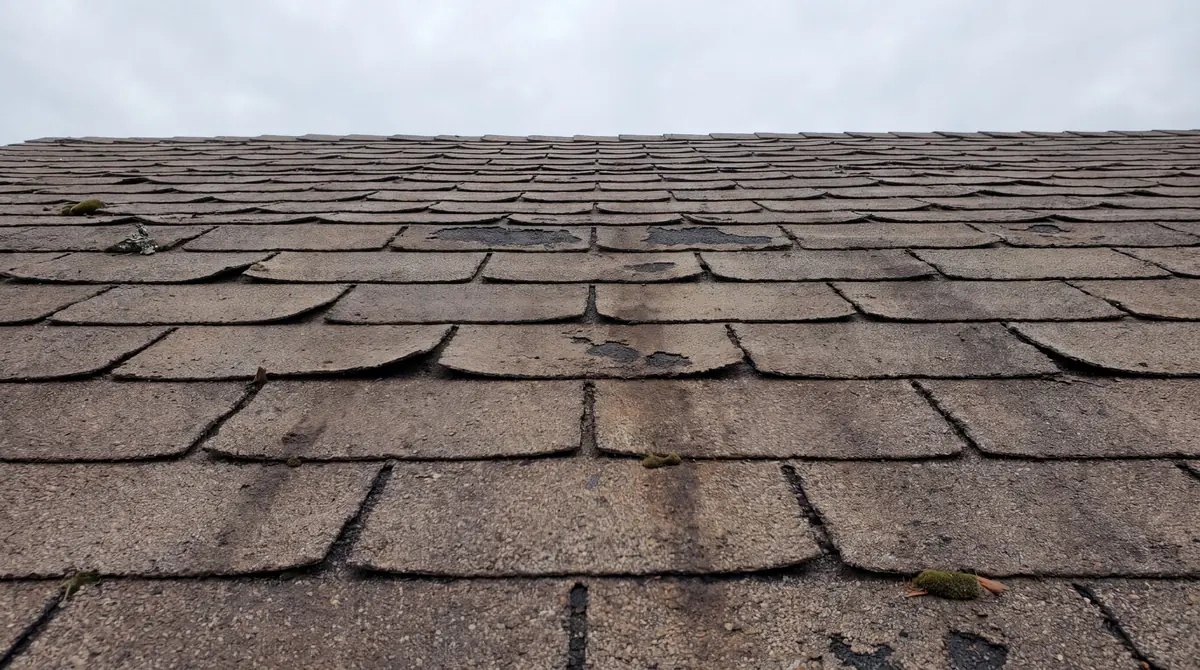
How shingles stay down
Each shingle is nailed near the top. The bottom edge is held by a strip of tar-like adhesive called the seal strip. After the roof goes on, the sun warms that strip and it glues each shingle to the one below.
That glue is what keeps wind from getting a grip. Once it lets go, the shingle is held only by its nails. It flaps in every gust. Each flap bends it at the nail line. On an older shingle, a bend turns into a crease, and a crease turns into a tear.
Why seal strips let go
A few things break that bond:
- Wind. Summer thunderstorms in the Triad bring sudden, strong gusts. One good gust can break the seal on a whole row.
- Age and heat. The adhesive dries out over the years, the same way the shingle does.
- A seal that never set. Shingles put on in cold weather may not seal well, and a shaded north face can take a long time to warm up enough to fix that.
- Debris. Pine needles and grit can work under an edge and keep it from sticking.
Once one shingle is loose, wind can get a lip under its neighbors. Loose shingles tend to spread if nobody deals with them.
They often show up next to nail pops, since a backed-out nail lets a shingle ride up. We handle both in the roof tune-up.
Spotting lifted shingles from the ground
On a windy day, watch your roof for a few minutes. Lifted shingles flutter. On a calm day, look for:
- A dark line of shadow under a shingle edge
- One shingle sitting higher than the ones beside it
- Creases running sideways across a tab
- Shingles or broken pieces in the yard after a storm
Creases mean the shingle has already been bent back hard. Gluing it down may not be enough. If you find whole shingles in the grass, see the storm note below before you call anyone else. We look for lifted shingles on every free roof assessment. You can also check our full list of signs your shingles are drying out.
How we secure loose shingles
- 01Check the bend
Before gluing anything, we make sure the shingle can still flex without cracking.
- 02Clean under the edge
Needles and grit come out so the new seal has a clean surface to grab.
- 03Set the nails
If a nail has backed out or is missing, that gets fixed first.
- 04Reseal and press
Roofing sealant goes under the tab, and the shingle gets pressed down flat.
- 05Treat the roof
With every shingle secured, the treatment goes on. It helps the shingles stay flexible, so they're less likely to crack the next time wind pushes on them.
Reseal it or replace it?
Most lifted shingles just need to be sealed back down. Some are too far gone.
| Item | Reseal it | Needs replacing |
|---|---|---|
| Shape | Lies flat once pressed down | Creased, torn, or curled hard |
| Flexibility | Bends without cracking | Cracks when lifted |
| Nails | Holding, or can be reset | Shingle torn through at the nail line |
| What happens | Secured in the tune-up | We flag it and talk through the options with you |
If shingles blew off in a storm, call your insurance company first about the damage. Missing shingles are storm damage, not aging. Rejuvenation is for sound roofs that are drying out.
Common questions
Why are my roof shingles lifting?
Usually the seal strip under the shingle has let go. Strong wind, an aging adhesive, cold-weather installs that never fully sealed, or debris under the edge can all cause it. Once a shingle lifts, the wind can work on the ones next to it.
Can lifted shingles be sealed back down?
Yes, if the shingle is still flat and flexible. A bead of roofing sealant under the tab holds it down again. If the shingle is creased, torn or brittle, it won't seal well, and it needs a different fix.
Is one loose shingle a big deal?
On its own, it's a small repair. Left alone, it can flap until it tears, and it gives wind a way under the rest of the row. It's worth having it secured before the next stormy season.
Will the rejuvenation treatment glue my shingles down?
No. The treatment soaks into the shingles and reacts with the aged asphalt to restore flexibility. It isn't an adhesive or a coating. That's why loose shingles get secured in the tune-up first. More on that in is roof rejuvenation a coating?