
Why shingles dry out
An asphalt shingle is a mat soaked in asphalt and topped with granules. The asphalt has oils in it that keep it flexible. Every summer day, heat and UV break some of those oils down.
As the oils go, the shingle stiffens. A stiff shingle can't flex with hot days and cool nights. It cracks, curls and lets go of its granules. In the Piedmont, with long summers and strong sun, that process gets plenty of fuel.
Early drying can be slowed down. Rejuvenation works by reacting with the aged asphalt to restore flexibility. Read how the soy treatment works for the details.
The signs, one by one
Sand-like grit in the gutters and at the downspouts. The shingles' sun shield is wearing off.
Edges turning up or middles humping. Heat, age and attic ventilation all play a part.
Splits across the tabs, and shingles that snap instead of bend.
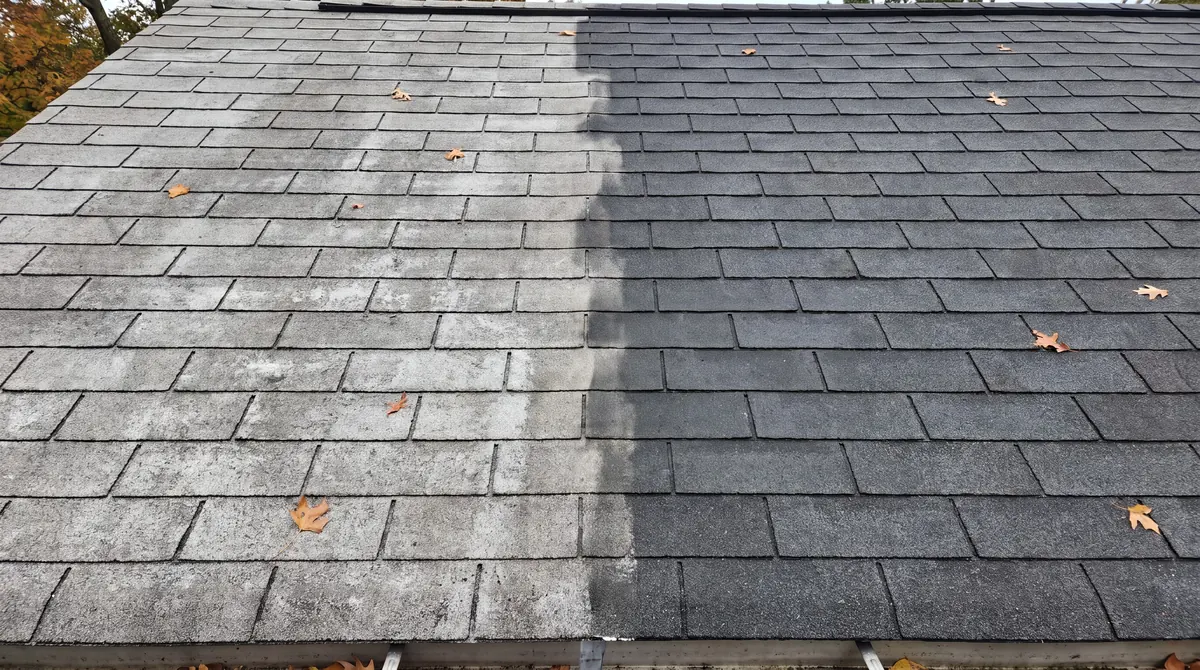
Dark stains running down the roof. That's usually algae, and treatment doesn't kill it.
Washed-out color on the sunny faces of the roof.
Edges that flutter in the wind because the seal strip let go.
Small bumps where a nail has backed out and lifted the shingle.
A quick check from the ground
No ladder needed. Stay off the roof.
- 01Start at the gutters
Scoop a handful from a gutter or look at the splash block under a downspout. A layer of grit means granule loss.
- 02Wait for low sun
Early morning or late afternoon light throws shadows that show curls, bumps and lifted tabs.
- 03Compare the faces
Look at the sunny side and the shady side. Fading tends to show on one, streaks and moss on the other.
- 04Check around the chimney and vents
Look for gaps, rust, or piles of pine needles.
- 05Peek in the attic
On a bright day, look for daylight through the decking or water stains on the wood.
Which signs treatment can help with
Treatment can help with
- Light to moderate granule loss
- Shingles that look dry and faded but lie flat
- Early, mild curling at the edges
- Shingles that still bend without snapping
- A roof that's sound underneath, with solid decking
Signs it's past treatment
- Bare patches where the granules are gone
- Shingles curled hard or clawed across the roof
- Cracks through many of the shingles
- Spongy or sagging decking
- Missing shingles or active leaks
Black streaks are usually algae, not a sign of drying out. Our treatment doesn't kill algae or moss. Those need a cleaning, and the black streaks page explains why.
What to do next
Seeing one or two of these signs doesn't mean your roof is shot. What matters is how far along the shingles are. That's hard to judge from the ground.
A free roof assessment answers it. The owner checks the shingles, the granules, the flashing and the decking himself, then tells you whether treatment fits. If you want a rough number first, the instant estimate can give you a range from your address. And if you're still weighing options, our page on whether your roof is a candidate walks through the qualifying checks.
Common questions
How do I know if my roof shingles are drying out?
The common signs are granules in your gutters, edges that curl, small cracks across the tabs, and a faded, chalky look on the sunny side. Shingles that feel stiff or snap when bent are dry. Any one of these is worth a closer look.
Can dried-out shingles be restored?
If they're caught early, yes, to a point. Rejuvenation soaks into the asphalt and restores some of the flexibility that heat and sun took out. It can't fix shingles that are cracked through, curled hard, or worn bare. That's why every job starts with an assessment.
Is a dried-out roof an emergency?
Usually not. Drying out is a slow problem that builds over years. The risk is waiting until it turns into leaks, cracking and lost granules, when treatment is no longer an option. A check now gives you time to choose.
Do dry shingles cause leaks?
Not right away. Dry shingles crack, curl and lose granules first. Over time those problems open paths for water, especially in wind-driven rain. Leaks usually come later, often at nail pops, lifted shingles or worn flashing.