
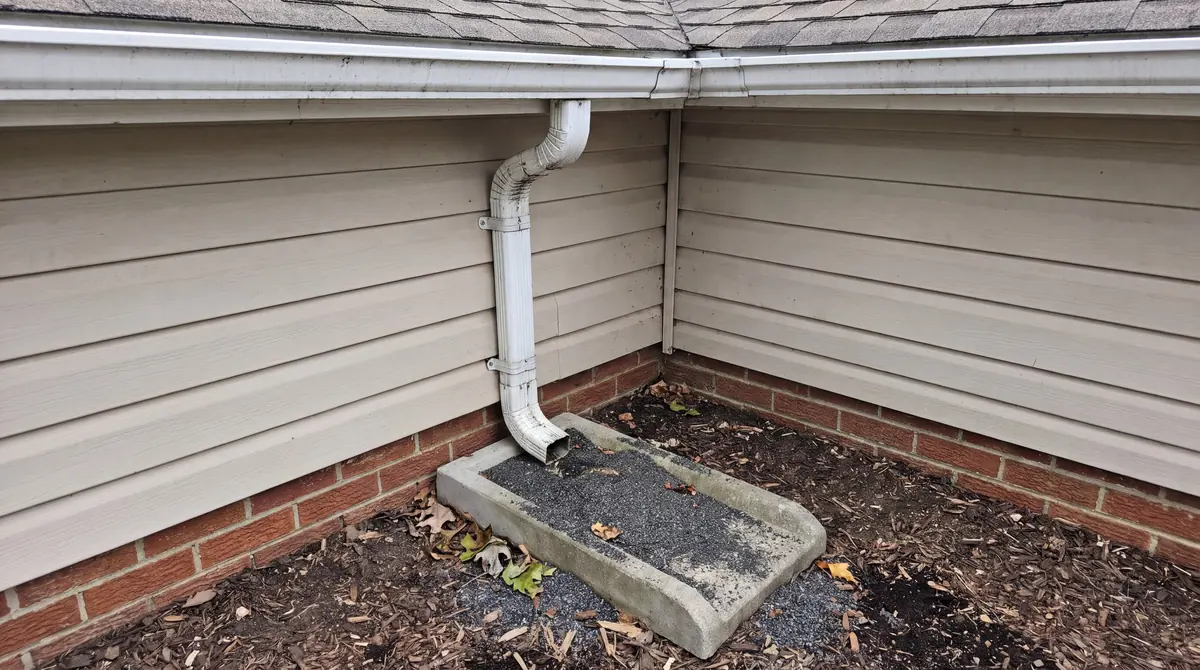
What granules do
Each shingle has a top coat of small, colored mineral granules pressed into the asphalt. They give the roof its color. Their bigger job is blocking UV.
Sunlight is hard on asphalt. UV breaks down the oils that keep it flexible. Granules shade the asphalt so it ages slower. They also help the shingle stand up to fire and foot traffic.
When the granules go, the asphalt underneath bakes in direct sun. That speeds up the other signs of age, like cracking, curling and fading. Granule loss is often the first sign you'll notice, which makes it a good early warning.
How much granule loss is normal?
A little shedding happens on every roof. Here's how to tell normal from a warning sign.
| Item | Normal | A warning sign |
|---|---|---|
| Roof age | Some loose extra granules wash off in the first year or so | Heavy shedding that keeps going on an older roof |
| Gutters | A light sprinkle after a hard rain | A layer of grit you can scoop by the handful |
| Splash blocks | A few granules at the downspout | A sandy fan at the bottom of every downspout |
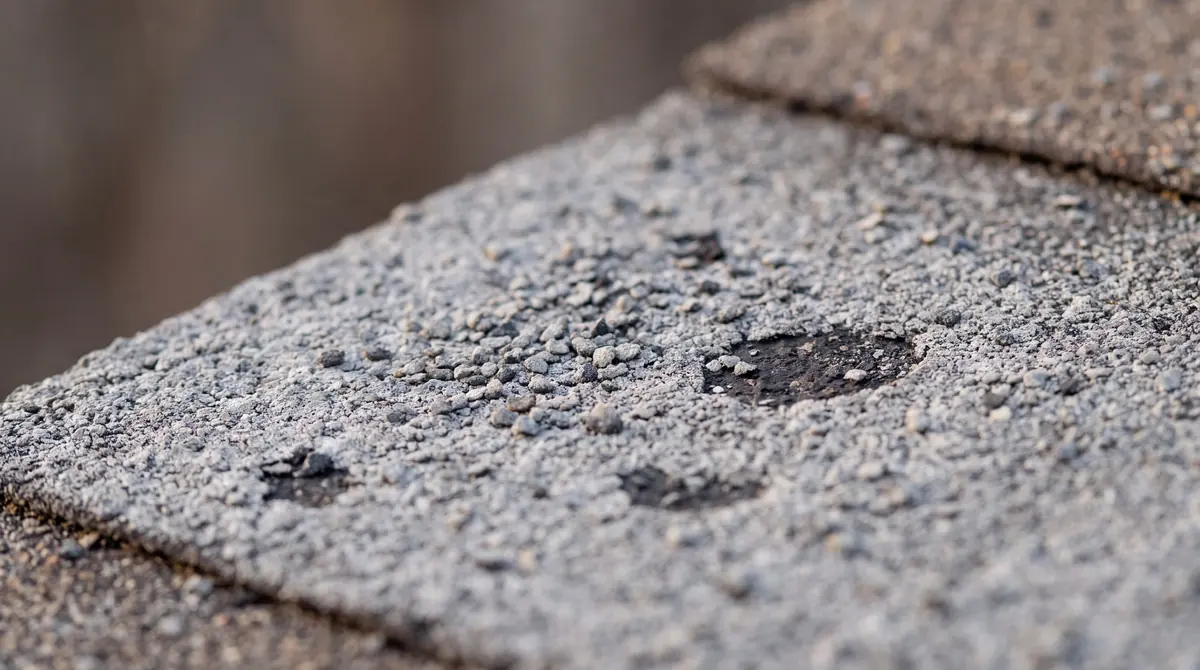
| Shingle surface | Even color and texture | Patchy, smooth or shiny spots |
| Bare spots | None | Dark asphalt showing through |
Why granules let go around here
Granules are held in place by the asphalt. As the asphalt dries out, it loses its grip. That's the main reason older roofs shed.
A few things speed it up in the Piedmont:
- Heat and UV. Long, hot summers dry out the asphalt faster. The south and west faces usually get it worst.
- Storms and hail. Hard summer rain washes loose granules off. Hail can knock them off in spots and leave dark bruises.
- Trees. Branches that rub the roof scrub granules away. Leaves and needles trap grit and moisture.
- Foot traffic. Walking on a hot roof, or on brittle shingles on a cold morning, grinds granules loose.
- Downspouts on a lower roof. Water dumping from an upper gutter wears a path in the shingles below.
What the treatment does for granules
APEX-1132 soaks into the asphalt and reacts with it to restore some of its flexibility. Softer, more flexible asphalt holds its granules better.
The lab numbers back that up. In granule adhesion testing, APEX-1132 showed a 50% improvement. A leading competitor's rejuvenator showed 17%. The data sheet ties that to better resistance to hail damage. The full table is on our lab results page.
Lab data is lab data. It tells you the treatment helps shingles hold their granules. It can't tell you exactly how your roof will do in a particular storm. If you want to know why soy oil works on asphalt in the first place, read about the soy roof treatment.
Rejuvenation can't glue lost granules back on. It helps the shingles hold on to the granules they still have. If large areas are already bare, treatment comes too late for those spots.
When treatment helps, and when it's too late
Treatment can help when
- There's grit in the gutters, but the roof color still looks even
- The loss is spread out, not in bald patches
- The shingles still bend without cracking
- You caught it before the asphalt is showing
- The decking underneath is solid
It's likely too late when
- Smooth, bare patches cover many shingles
- Black asphalt shows on the sunny faces
- Granule loss comes with cracking and hard curling
- The roof has fresh hail damage (call your insurer first)
- There are leaks or soft spots in the decking
Common questions
Is it bad to have shingle granules in my gutters?
A few granules are normal, especially on a newer roof. A steady layer of grit on an older roof means the asphalt is drying out and losing its grip. That's the time to get the roof checked, while treatment can still help. The free roof assessment costs nothing.
How much granule loss is too much?
If you can scoop grit out of the gutters by the handful, or you see smooth or dark patches on the shingles, it's past normal. Bare spots where asphalt shows through mean those shingles have lost their sun shield.
Can granules be put back on shingles?
Not in any way that lasts. Once a granule is gone, it's gone. What a treatment can do is help the shingles hold on to the granules they still have. That's why timing matters with granule loss.
Does hail cause granule loss?
Yes. Hail can knock granules off and leave dark bruised spots. If you just had a hailstorm, call your insurance company about damage first. Our post on hail and aging shingles in the Triad covers what to do after a storm.