
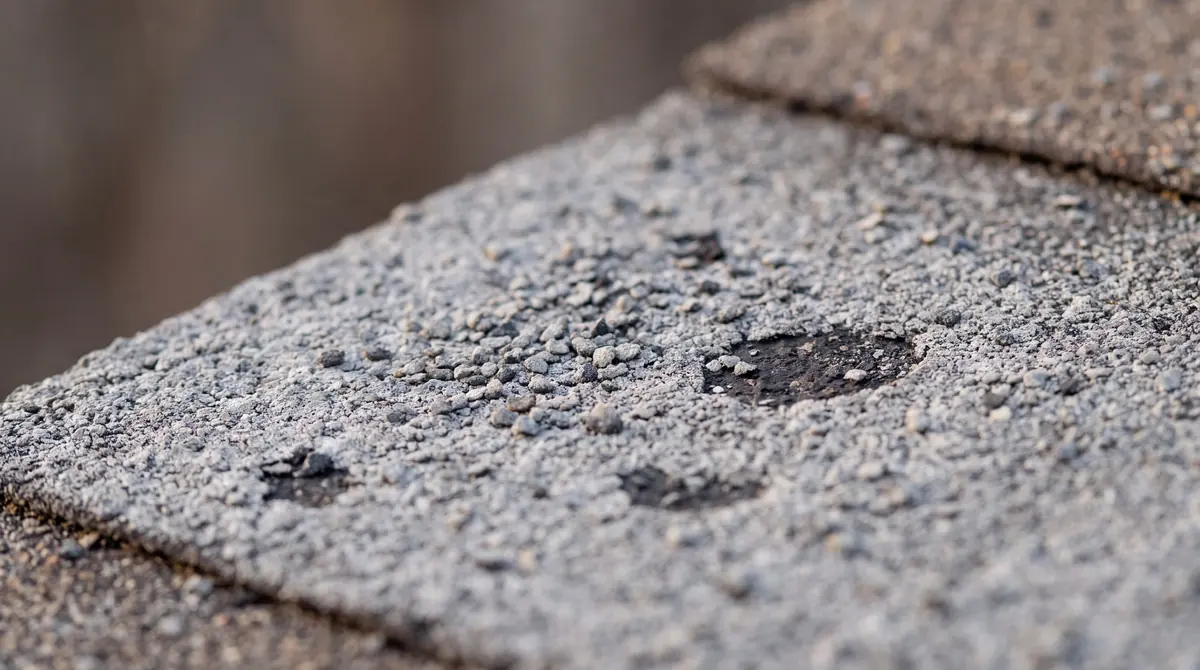
What a nail pop looks like
From the ground, a nail pop looks like a small bump or a tented spot in a row of shingles. Low sun in the morning or evening makes it easier to see, because the bump throws a little shadow. Up close, you may see a nail head peeking through, or a small tear where it pushed up.
A pair of binoculars helps. Look for:
- Small raised bumps in an otherwise flat row
- A shingle edge that won't lie down in one spot
- Shiny dots that catch the sun
You won't catch them all from the yard. Many nail pops hide under the shingle above and only show when someone walks the roof.
Why roofing nails back out
Nails don't pop on their own. Something pushes them.
Heat cycling. A Piedmont attic gets hot on a summer afternoon and cools off at night. The wood decking swells and shrinks with that heat and with moisture. Each cycle works the nail up a hair. Over years, the hairs add up.
Damp decking. Humid air in the attic swells plywood and OSB. When the wood dries, it shrinks and leaves the nail loose in its hole.
How it went in. A nail driven at an angle, or one that missed solid wood, has less grip from day one. A nail too short for the decking can back out, too.
Dry shingles. Old shingles stiffen as they lose their oils. A stiff shingle won't flex back down over a nail that has lifted a little, so the bump grows.
A popped nail leaves an open hole in the shingle under it. Rain runs down the roof and finds that hole. That's how a tiny bump turns into a stained ceiling and soft decking.
How a nail pop gets fixed
- 01Mark every one
We note the nail pops we find during the free assessment, so none get missed on treatment day.
- 02Reset or pull
The popped nail gets driven back or pulled. A new nail goes in close by, into solid wood.
- 03Seal the holes
The old hole and the new nail head get sealed so water can't follow the nail down.
- 04Seal the shingle down
The shingle above gets sealed back down so it lies flat and the wind can't catch it.
- 05Spray
With the nails set, the rejuvenation treatment goes on and soaks into the shingles.
Simple fix or warning sign?
Usually a simple fix
- A few scattered pops on a roof that's otherwise flat
- No stains or soft spots under them
- The shingle above is still flexible and whole
- Decking that feels solid underfoot
- Nails that grip again once reset into solid wood
A sign of something bigger
- Dozens of pops across the whole roof
- Decking that feels spongy when you walk it
- Water stains in the attic around the nails
- Rusted nails or rot around the holes
- Shingles that tear when the nail is reset
Nail pops and rejuvenation
The treatment can't hold a nail down. That's why the tune-up comes first. Once the nails are set and sealed, the treatment works on the shingles themselves. It reacts with the aged asphalt to restore some flexibility, so the shingles bend and lie flat.
If the decking is the real problem, more nails won't help, and neither will a treatment. That roof needs more work than we do. Read how to tell if a roof is a candidate, and see our take on rejuvenation vs. replacement.
Common questions
What causes nail pops on a roof?
Mostly heat and moisture. The wood decking swells and shrinks with hot days, cool nights and humid air, and each cycle pushes the nail up a little. Nails that were driven crooked, missed solid wood, or were too short tend to pop sooner.
Are nail pops on a roof serious?
One or two are a small fix if you catch them. Left alone, each one is an open hole where rain can get in, and that can lead to leaks and rotted decking. A lot of pops across the roof can point to a decking problem.
Can I fix a nail pop myself?
Some homeowners do, but getting on a roof is the risky part. Walking on old, dry shingles can also crack them. The free roof assessment costs nothing. If you go ahead with treatment, nail pops get fixed in the tune-up.
Will nail pops come back after they're fixed?
They can, if the decking keeps moving. Setting a new nail into solid wood and sealing it gives the repair its best chance to hold. Since the tune-up comes before every treatment, any new pops get caught each time a roof is re-treated.