
The quick check
Likely a candidate
- Asphalt shingles, architectural or 3-tab
- Shingles look faded or dry but lie flat
- Some granules in the gutters, but no bare spots
- Seal strips mostly holding, no flapping tabs
- No leaks and no soft spots underfoot
Not a candidate yet, or at all
- Metal, tile, slate, flat or membrane roof
- Active leaks or water stains spreading inside
- Soft, spongy or sagging decking
- Bare black mat showing through
- Severe hail damage or large missing sections
How old is too old?
A range you'll often hear for rejuvenation is roofs about 8 to 20 years old. Treat that as a rough guide, not a rule.
Age alone doesn't decide it. A 12-year-old roof on a south-facing slope in full sun can be drier than an 18-year-old roof under heavy shade. A thin 3-tab roof ages faster than a heavier architectural one. Attic heat plays a part too.
What matters is whether the shingles can still bend, hold granules and stay sealed. A roof that's dry but intact can be treated. A roof that's falling apart can't, no matter what year it went on. For more, read how old is too old for roof rejuvenation.
Checks you can do from the ground
Stay off the roof. You can learn a lot from the yard and the attic.
- 01Look in the gutters
Granules look like coarse sand or dark grit. A little is normal. Piles of it at the downspouts mean the shingles are shedding.
- 02Look along the edges
Stand back and sight down the shingle rows. Edges should lie flat. Curled corners or cupped edges mean the shingles have dried out.
- 03Look for bare spots
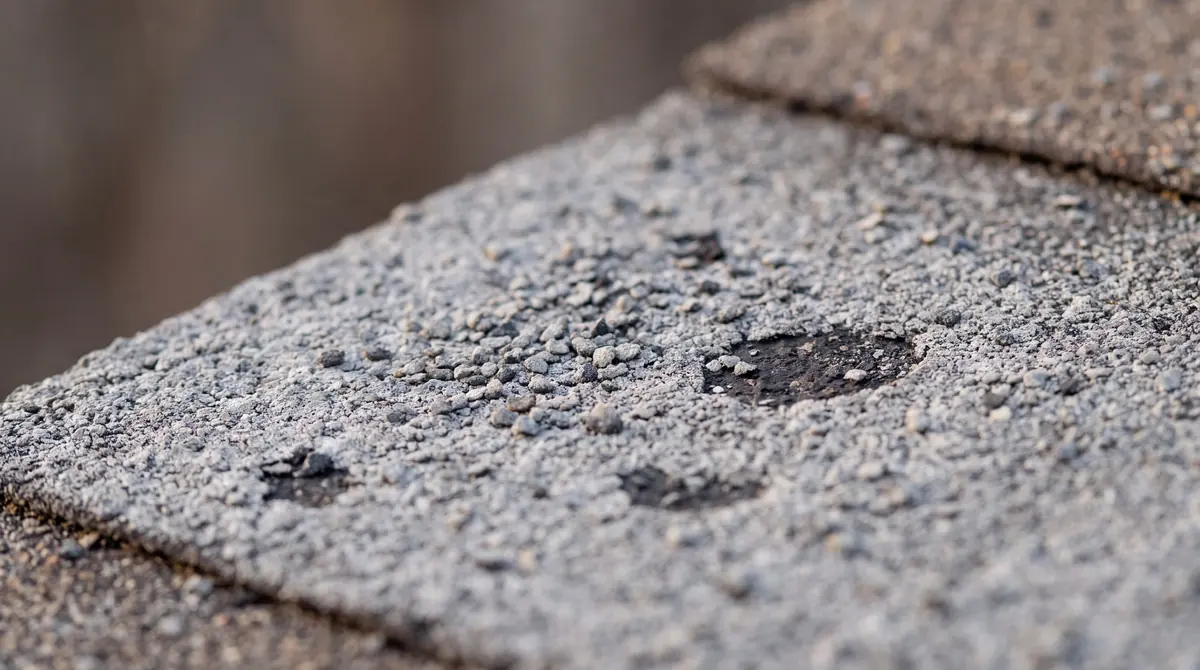
Dark, smooth patches where the granules are gone can mean the shingle is worn through to the mat.
- 04Check the attic and ceilings
Water stains, damp insulation or daylight through the roof boards point to leaks or decking problems. Those need fixing before any treatment.
- 05Note any black streaks
Streaks are usually algae. They don't rule a roof out, but the treatment won't remove them.
One roof, different answers on each side
Lots of homes around here sit under pine and oak trees. Trees change how a roof ages, and they don't change every side the same way:
- Sunny faces dry out and fade first
- Shaded north faces stay damp longer and tend to grow algae
- Pine needles pile up in valleys and behind chimneys and hold moisture against the shingles
So a roof can be a strong candidate on the south side and borderline on the north. That's why we walk every face of the roof, not only the one you see from the driveway.
What we check up close
From the ground you can spot warning signs. The real answer comes from up on the roof. At the free roof assessment, the owner checks:
- Flexibility. He bends a shingle to see if it flexes or cracks.
- Granule loss. How much is gone, and where.
- Seals and nails. Loose shingles, failed seal strips and nail pops.
- Flashing. The metal and sealant around chimneys, vents and walls.
- The deck. Soft or spongy spots that could mean rotted wood underneath.
Then you get a straight answer. Treat it, fix a few things first, or start planning for a new roof.
Loose shingles, a few nail pops and worn flashing sealant are normal on an aging roof. Fixing them is part of the tune-up that comes with every treatment.
Problems that need more than a tune-up
The tune-up handles small stuff. Some problems are bigger than that, and spraying over them would waste your money:
- Water already getting into the house
- Roof decking that has rotted or gone soft
- Shingles that are torn, gone in whole sections, or curled past the point of lying flat
- Fiberglass mat showing where the shingle has worn through
- Heavy storm or hail damage, which is a call to your insurance company first
If any of these turn up, we'll say so and tell you what we'd do in your shoes. You can also read what the roof tune-up does and doesn't cover.
Common questions
Can you rejuvenate a 25-year-old roof?
Sometimes, but the odds drop. Many roofs that old have bare spots, hard curling or soft decking. If the shingles still bend, hold granules and lie flat, treatment may still help. We'll look and tell you, even if the answer is no.
Can a newer roof be treated?
SoyLei says APEX-1132 can be used on newer shingles to help them hold granules. Whether it's worth doing on your roof yet is a fair question, and we'll give you a plain answer. If the roof is still under a manufacturer warranty, read does roof rejuvenation void my shingle warranty first.
Does my shingle type matter?
Both architectural and 3-tab asphalt shingles can be candidates, but they age differently. Thin 3-tab shingles curl and crack sooner, so their window is shorter. Read about architectural shingles and 3-tab shingles to see how each one wears.
Do I need a roof inspection before treatment?
Yes, and it's free. Every job starts with a roof assessment by the owner. There's no cost and no obligation. He checks the shingles, granules, flexibility and flashing, and you get a clear answer either way.