
Why roofs fade
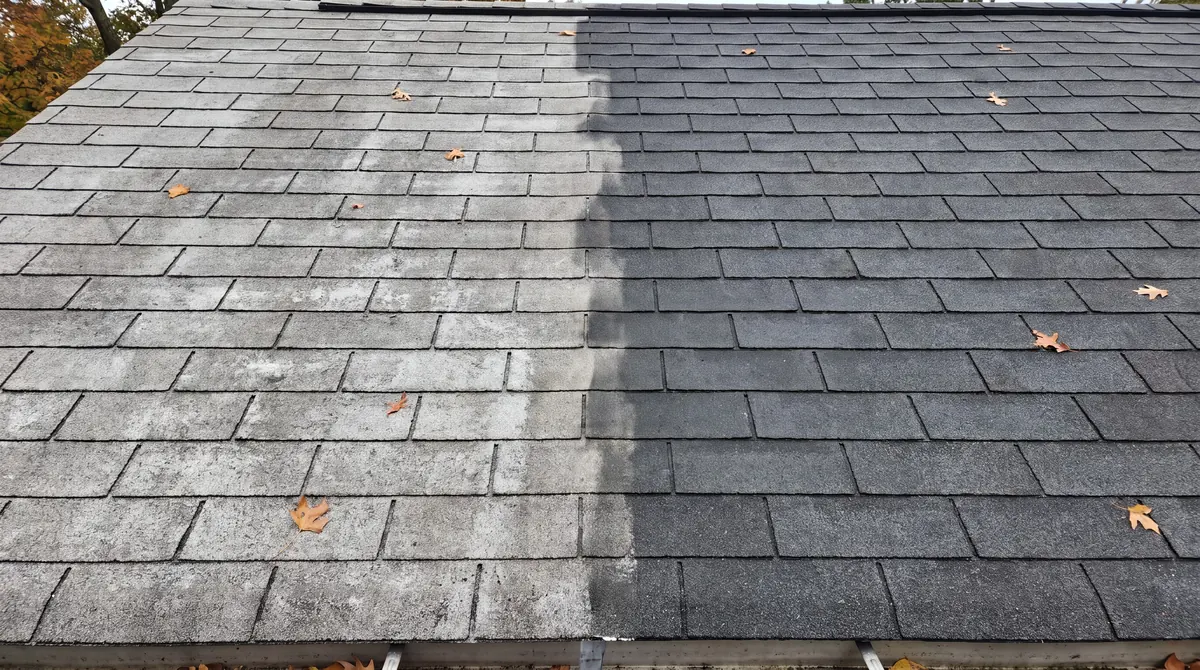
Two things fade a shingle. First, UV and heat dry out the asphalt that holds the granules. Dry asphalt looks dull and gray. Second, the granules wear and loosen over time, and some wash away. Fewer granules means less color and more bare asphalt in the sun.
Around Asheboro, the south and west sides of a roof take the strongest afternoon sun. That's usually where fading shows first. Walk around the house and compare them with the north side. If the north side looks noticeably deeper in color, and it isn't algae, the difference is sun wear.
Fading tells you where to look
Color is the first thing people notice, but it points to something more useful. The faded faces have taken the most UV, so those shingles are likely the driest on the roof.
Check those faces for the other signs:
- Grit in the gutters below them, a sign of granule loss
- Small splits across the tabs, covered on our cracked shingles page
- Edges lifting or cupping, explained under curling shingles
Fading alone, on shingles that still lie flat and bend, is often an early stage. That's a good time to look at treatment.
Sun bleaching in the lab
SoyLei's data sheet compares APEX-1132 with a leading competitor's rejuvenator.
| Item | Leading competitor | APEX-1132 |
|---|---|---|
| Sun bleaching | Short-term improvement | Long-lasting improvement |
| Granule adhesion improvement | 17% | 50% |
What color change to expect
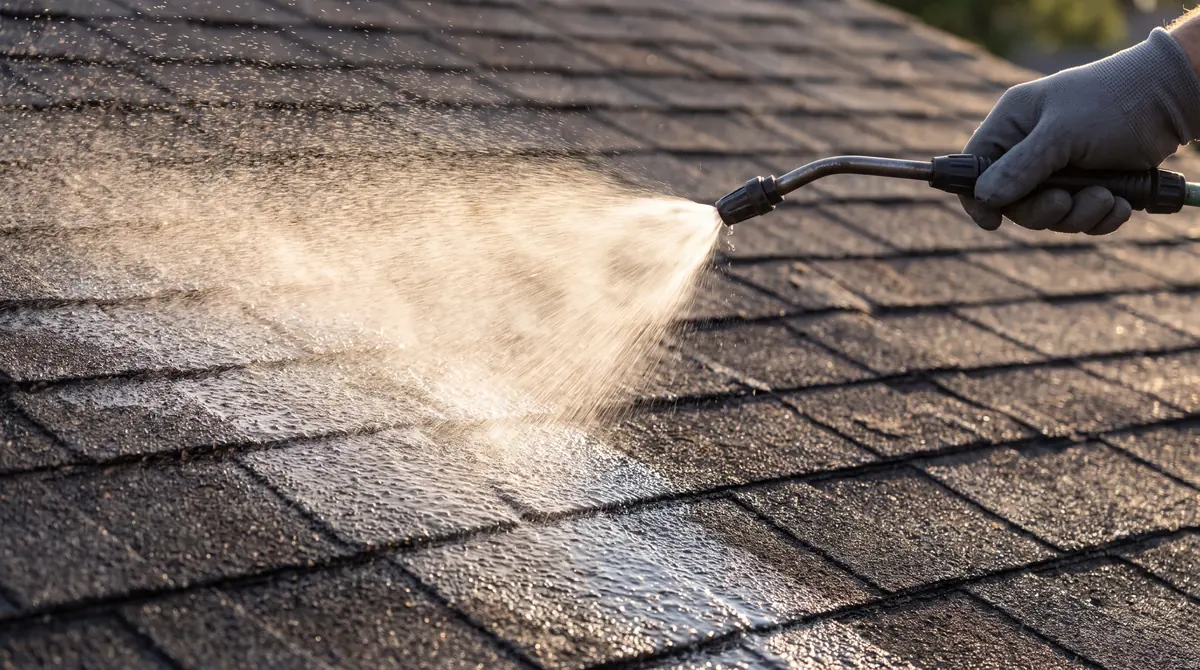
The treatment goes on as a milky white liquid and dries in. It soaks into the asphalt. It isn't paint or stain, so it won't turn your roof a new color.
What it can help with is the dry, washed-out look. SoyLei's data sheet lists a long-lasting improvement in sun bleaching for APEX-1132. How much change you see depends on how faded the roof is and how many granules are left.
If your roof has patches from old repairs, treatment won't make them match. Shingles from different batches age differently. The lab results page covers the rest of the data.
Is a faded roof a candidate?
Often a good candidate
- Even fading, with granules still covering the shingles
- Fading on the sunny faces, healthier shingles elsewhere
- Shingles still lie flat and bend without cracking
- You care more about the roof's life than its looks
- No leaks or soft decking
Not a fit when
- Faded areas are bare, with asphalt showing
- Color loss comes with heavy cracking or curling
- What you really want is a new color
- Dark streaks are the main issue, which is algae
- The roof is at the end of its life
Common questions
Why are my roof shingles fading?
Sun and heat. UV dries out the asphalt and wears down the granule layer over the years. The south and west faces get the most afternoon sun, so they usually fade first. Fading is a sign those shingles are drying out.
Will treatment bring back my roof's original color?
Don't expect the original color back. The treatment isn't paint. It can help with a dry, washed-out look, and SoyLei's data sheet shows a long-lasting improvement in sun bleaching. Our FAQ on whether rejuvenation changes roof color goes deeper.
Is a faded roof a bad roof?
Not by itself. Many faded roofs are still sound. Fading tells you the shingles on that side have taken a lot of sun and are drying out. That's often the best time to treat, before cracking and granule loss set in.
Which side of my roof fades first?
Usually the south and west faces. They get the strongest afternoon sun. The north side stays shadier, so it fades less, though it's more likely to grow algae and moss.